- Home
- Training Courses
- Membership
- About Us
- Instructors Blog
- December 2023: All I Want For Christmas
- November 2023: ESA Report Reviews
- October 2023: Can AI Write an ESA Report?
- September 2023: Getting Paid... or Not
- August 2023: Take Me Back...
- July 2023: To Bid or Not To Bid
- June 2023: Selecting a Supplier
- April 2023: Phase 1 Problems, Part 3
- March 2023: Phase 1 Problems, Part 2
- February 2023: Phase 1 Problems, Part 1
- January 2023: Working Outside in Winter
- 2022 Blogs
- 2021 Blogs
- December 2021: Asbestos in your Home
- Sept 2021: Dirty Jars And Other Bad Things… Part 2
- August 2021: Dirty Jars And Other Bad Things… Part 1
- July 2021: How do you want that drawing to look? Part 2
- June 2021: How Did You Want That Drawing To Look? Part 1
- April 2021: So You Need a RSC... Part 2
- March 2021: So You Need a RSC... Part 1
- February 2021: What's In Your Toolbox? Part 2
- January 2021: What's In Your Toolbox? Part 1
- 2020 Blogs
- December 2020: A Day in the Life, Part 2
- November 2020: A Day in the Life, Part 1
- October 2020: Exploring Your Career Path
- September 2020: So You Want To Start Your Own Business - Part 2
- August 2020- So You Want to Start Your Own Business
- June 2020: Effective Communication
- May 2020: Tips For Working From Home
- April 2020: Conducting ESA’s During a Pandemic
- March 2020: It's Not Easy Being Green
- February 2020: Looking Ahead; Bold Predictions for the Next Decade
- January 2020: Looking Back; A Decade in Review
- 2019 Blogs
- 2018 Blogs
- 2017 Blogs
- 2016 Blogs
- 2015 Blogs
- Find an AESAC Member
Menu- Home
- Training Courses
- » Training Courses
- » Webinar Series
- » Calender of Events
- » Course Registration
- » Course Instructors
- » Testimonials
- Membership
- » Become a Member
- » Certifications
- » Membership Search
- » Update Member Profile
- » Members Only
- » » Member Login
- » » Membership Renewal
- » » Create/Change Password
- » » CESA Certification Application
- About Us
- » About AESAC
- » Course Instructors
- » Contact Us
- Instructors Blog
- » December 2023: All I Want For Christmas
- » November 2023: ESA Report Reviews
- » October 2023: Can AI Write an ESA Report?
- » September 2023: Getting Paid... or Not
- » August 2023: Take Me Back...
- » July 2023: To Bid or Not To Bid
- » June 2023: Selecting a Supplier
- » April 2023: Phase 1 Problems, Part 3
- » March 2023: Phase 1 Problems, Part 2
- » February 2023: Phase 1 Problems, Part 1
- » January 2023: Working Outside in Winter
- » 2022 Blogs
- » » December 2022: Advice To My Younger Self
- » » October 2022: Pre-Purchase Due Diligence
- » » Sept 2022: Words Matter
- » » July 2022: Let Us Come To You
- » » April 2022: Due Diligence
- » » March 2022: Time Management
- » » February 2022: Spinning Augers... Part 2
- » » January 2022: Spinning Augers... Part 1
- » 2021 Blogs
- » » December 2021: Asbestos in your Home
- » » Sept 2021: Dirty Jars And Other Bad Things… Part 2
- » » August 2021: Dirty Jars And Other Bad Things… Part 1
- » » July 2021: How do you want that drawing to look? Part 2
- » » June 2021: How Did You Want That Drawing To Look? Part 1
- » » April 2021: So You Need a RSC... Part 2
- » » March 2021: So You Need a RSC... Part 1
- » » February 2021: What's In Your Toolbox? Part 2
- » » January 2021: What's In Your Toolbox? Part 1
- » 2020 Blogs
- » » December 2020: A Day in the Life, Part 2
- » » November 2020: A Day in the Life, Part 1
- » » October 2020: Exploring Your Career Path
- » » September 2020: So You Want To Start Your Own Business - Part 2
- » » August 2020- So You Want to Start Your Own Business
- » » June 2020: Effective Communication
- » » May 2020: Tips For Working From Home
- » » April 2020: Conducting ESA’s During a Pandemic
- » » March 2020: It's Not Easy Being Green
- » » February 2020: Looking Ahead; Bold Predictions for the Next Decade
- » » January 2020: Looking Back; A Decade in Review
- » 2019 Blogs
- » » November 2019
- » » September 2019
- » » August 2019
- » » July 2019
- » » May 2019
- » » March 2019
- » » February 2019
- » » January 2019
- » 2018 Blogs
- » » November 2018
- » » October 2018
- » » September 2018
- » » August 2018
- » » July 2018
- » » June 2018
- » » May 2018
- » » March 2018
- » » February 2018
- » » January 2018
- » 2017 Blogs
- » » April 2017
- » » June 2017
- » » August 2017
- » » September 2017
- » » December 2017
- » 2016 Blogs
- » » October 2016
- » » September 2016
- » » August 2016
- » » July 2016
- » » June 2016
- » » March 2016
- » » January 2016
- » » December 2016
- » » November 2016
- » 2015 Blogs
- » » April 2015
- » » July 2015
- » » September 2015
- » » October 2015
- » » December 2015
- Find an AESAC Member
As environmental professionals, we spend a significant amount of time reviewing historical records, aerial photographs, environmental databases, and regulatory files before ever setting foot on a property. These sources are critical components of the environmental due diligence process and often provide valuable insight into a site's history and potential environmental concerns.
However, one lesson I continue to learn throughout my career is that properties are not always what they appear to be on paper. Sometimes, the most significant environmental concerns are only discovered during the site visit itself.
Real-World Example:A few years ago, I completed a Phase I Environmental Site Assessment (ESA) on a property in “small-town Alberta” that initially appeared to present relatively low environmental risk.
The site had only been developed for approximately ten years and was reportedly utilized by a semi-truck transport company. The operations appeared straightforward: a few trucks and trailers were stored on-site, minor maintenance was performed, and the remainder of the property functioned as a typical commercial yard.
After reviewing the historical information, records, aerial photographs, and reported site activities, I did not anticipate finding any significant environmental concerns.
That assumption changed within minutes of arriving on-site.
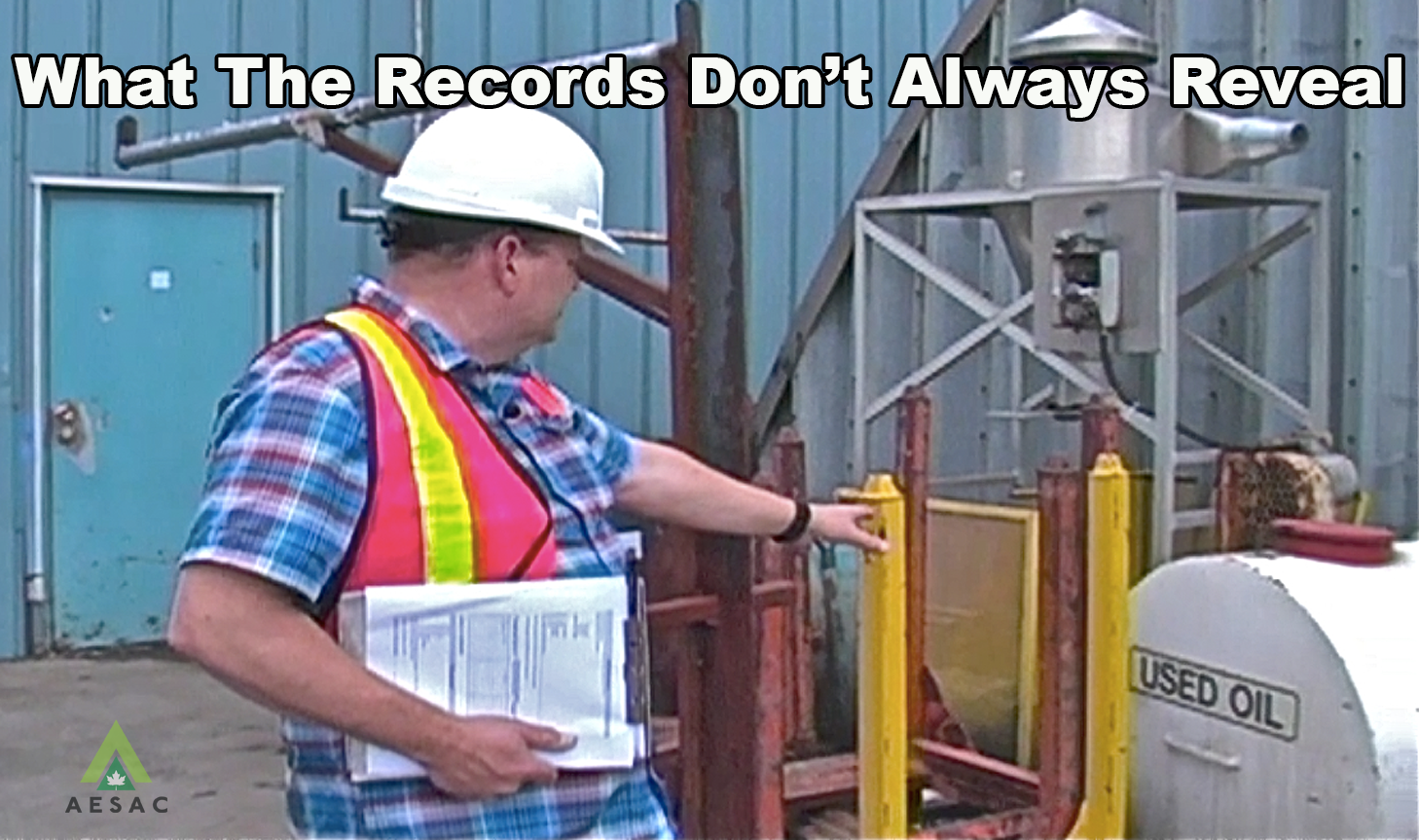
While walking the rear portion of the property, I observed a used oil aboveground storage tank (AST). At first glance, it appeared unremarkable. However, upon closer inspection, I noticed a slow active leak originating from the base of the tank.
Surrounding the AST was a large, black-stained area of soil measuring approximately 15 feet by 20 feet. The vegetation within the affected area was completely dead, creating a stark contrast with the surrounding yard.
The visual evidence suggested that the release had been occurring for a very long time.
Subsequent environmental investigation confirmed exactly that. The tank had been slowly leaking used oil for nearly a decade, resulting in petroleum hydrocarbon contamination extending to depths greater than 10 feet below ground surface.
What initially appeared to be a relatively low-risk property ultimately required significant environmental investigation and remediation.
Why Site Reconnaissance Still Matters:
This experience reinforced something that every environmental professional eventually learns: not every environmental concern is documented in a file.
Historical records, environmental databases, and aerial photographs are invaluable tools, but they cannot identify every leak, spill, or improper storage practice that may have occurred on a property. Slow releases, in particular, can persist for years without ever being reported to regulators or appearing in environmental records.
That is why site reconnaissance remains one of the most important components of a Phase I ESA.
A thorough site visit provides an opportunity to identify visual indicators such as stained soils, distressed vegetation, improper chemical storage, unusual odours, stressed pavement, or evidence of historical releases that might otherwise go unnoticed.
For me, this project served as a valuable reminder that environmental due diligence is about more than reviewing records. Sometimes the most important finding of an entire assessment is one that was never documented anywhere at all.
Sam Siegl, C.tech, CESA
Sam is the founder and principal consultant of Nexus Environmental Services Ltd., based in Lethbridge, Alberta. With over a decade of dedicated experience in the environmental consulting industry, Sam specializes in Phase I, II, and III Environmental Site Assessments for commercial and industrial properties.
Sam can be reached at info@nexusenvironmental.ca

In-House Training
Membership
About Us
Contact UsCopyright (c) 2026 Associated Environmental Site Assessors of Canada; AESAC Inc.