- Home
- Training Courses
- Membership
- About Us
- Instructors Blog
- December 2023: All I Want For Christmas
- November 2023: ESA Report Reviews
- October 2023: Can AI Write an ESA Report?
- September 2023: Getting Paid... or Not
- August 2023: Take Me Back...
- July 2023: To Bid or Not To Bid
- June 2023: Selecting a Supplier
- April 2023: Phase 1 Problems, Part 3
- March 2023: Phase 1 Problems, Part 2
- February 2023: Phase 1 Problems, Part 1
- January 2023: Working Outside in Winter
- 2022 Blogs
- 2021 Blogs
- December 2021: Asbestos in your Home
- Sept 2021: Dirty Jars And Other Bad Things… Part 2
- August 2021: Dirty Jars And Other Bad Things… Part 1
- July 2021: How do you want that drawing to look? Part 2
- June 2021: How Did You Want That Drawing To Look? Part 1
- April 2021: So You Need a RSC... Part 2
- March 2021: So You Need a RSC... Part 1
- February 2021: What's In Your Toolbox? Part 2
- January 2021: What's In Your Toolbox? Part 1
- 2020 Blogs
- December 2020: A Day in the Life, Part 2
- November 2020: A Day in the Life, Part 1
- October 2020: Exploring Your Career Path
- September 2020: So You Want To Start Your Own Business - Part 2
- August 2020- So You Want to Start Your Own Business
- June 2020: Effective Communication
- May 2020: Tips For Working From Home
- April 2020: Conducting ESA’s During a Pandemic
- March 2020: It's Not Easy Being Green
- February 2020: Looking Ahead; Bold Predictions for the Next Decade
- January 2020: Looking Back; A Decade in Review
- 2019 Blogs
- 2018 Blogs
- 2017 Blogs
- 2016 Blogs
- 2015 Blogs
- Find an AESAC Member
Menu- Home
- Training Courses
- » Training Courses
- » Webinar Series
- » Calender of Events
- » Course Registration
- » Course Instructors
- » Testimonials
- Membership
- » Become a Member
- » Certifications
- » Membership Search
- » Update Member Profile
- » Members Only
- » » Member Login
- » » Membership Renewal
- » » Create/Change Password
- » » CESA Certification Application
- About Us
- » About AESAC
- » Course Instructors
- » Contact Us
- Instructors Blog
- » December 2023: All I Want For Christmas
- » November 2023: ESA Report Reviews
- » October 2023: Can AI Write an ESA Report?
- » September 2023: Getting Paid... or Not
- » August 2023: Take Me Back...
- » July 2023: To Bid or Not To Bid
- » June 2023: Selecting a Supplier
- » April 2023: Phase 1 Problems, Part 3
- » March 2023: Phase 1 Problems, Part 2
- » February 2023: Phase 1 Problems, Part 1
- » January 2023: Working Outside in Winter
- » 2022 Blogs
- » » December 2022: Advice To My Younger Self
- » » October 2022: Pre-Purchase Due Diligence
- » » Sept 2022: Words Matter
- » » July 2022: Let Us Come To You
- » » April 2022: Due Diligence
- » » March 2022: Time Management
- » » February 2022: Spinning Augers... Part 2
- » » January 2022: Spinning Augers... Part 1
- » 2021 Blogs
- » » December 2021: Asbestos in your Home
- » » Sept 2021: Dirty Jars And Other Bad Things… Part 2
- » » August 2021: Dirty Jars And Other Bad Things… Part 1
- » » July 2021: How do you want that drawing to look? Part 2
- » » June 2021: How Did You Want That Drawing To Look? Part 1
- » » April 2021: So You Need a RSC... Part 2
- » » March 2021: So You Need a RSC... Part 1
- » » February 2021: What's In Your Toolbox? Part 2
- » » January 2021: What's In Your Toolbox? Part 1
- » 2020 Blogs
- » » December 2020: A Day in the Life, Part 2
- » » November 2020: A Day in the Life, Part 1
- » » October 2020: Exploring Your Career Path
- » » September 2020: So You Want To Start Your Own Business - Part 2
- » » August 2020- So You Want to Start Your Own Business
- » » June 2020: Effective Communication
- » » May 2020: Tips For Working From Home
- » » April 2020: Conducting ESA’s During a Pandemic
- » » March 2020: It's Not Easy Being Green
- » » February 2020: Looking Ahead; Bold Predictions for the Next Decade
- » » January 2020: Looking Back; A Decade in Review
- » 2019 Blogs
- » » November 2019
- » » September 2019
- » » August 2019
- » » July 2019
- » » May 2019
- » » March 2019
- » » February 2019
- » » January 2019
- » 2018 Blogs
- » » November 2018
- » » October 2018
- » » September 2018
- » » August 2018
- » » July 2018
- » » June 2018
- » » May 2018
- » » March 2018
- » » February 2018
- » » January 2018
- » 2017 Blogs
- » » April 2017
- » » June 2017
- » » August 2017
- » » September 2017
- » » December 2017
- » 2016 Blogs
- » » October 2016
- » » September 2016
- » » August 2016
- » » July 2016
- » » June 2016
- » » March 2016
- » » January 2016
- » » December 2016
- » » November 2016
- » 2015 Blogs
- » » April 2015
- » » July 2015
- » » September 2015
- » » October 2015
- » » December 2015
- Find an AESAC Member
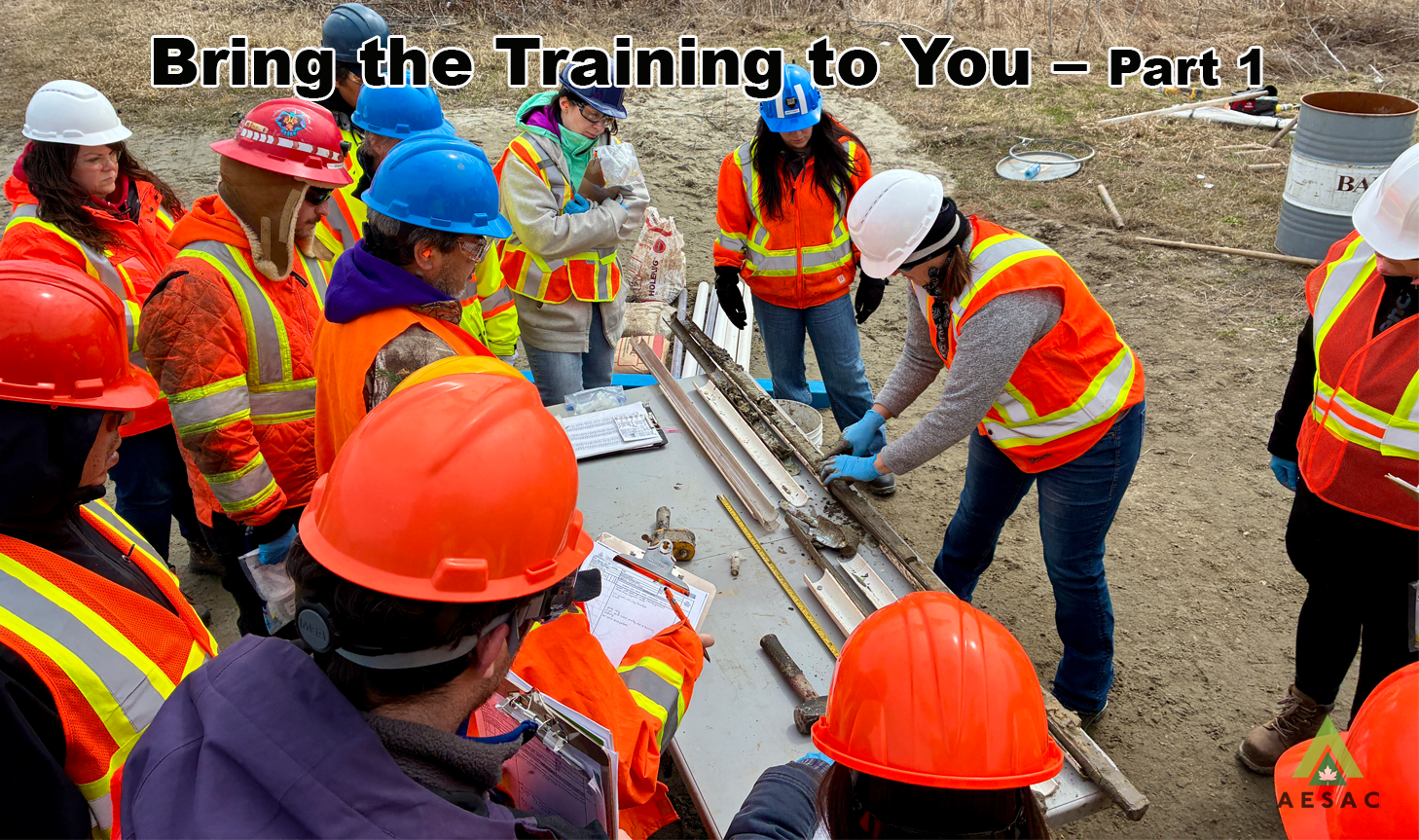
Quality has always been at the heart of good environmental work. Whether conducting a Phase 1 ESA, drilling a borehole, or making decisions that affect landowners, regulators, lenders, and communities, the quality of the work depends on the people doing it.
The environmental industry moves quickly, and many professionals can relate to the feeling of being handed a project and expected to figure things out as they go. While hands-on experience is invaluable, strong training and mentorship are what help transform knowledge into confidence and competence.
Environmental Site Assessment (ESA) training is an important investment in both people and quality. It helps professionals understand not only the "how" of environmental due diligence, but also the "why" behind industry standards, best practices, and professional judgment. Whether you're part of a consulting firm, municipality, developer, financial institution, or First Nation or Indigenous community, having well-trained staff is key to delivering consistent, defensible work. Of course, finding the time and budget to send employees away for training can be a challenge, with travel, accommodations, and time out of the office often adding to the cost.
That's where in-house training can make a real difference. By bringing learning directly to your team, organizations can focus on the knowledge, tools, and practical skills that matter most to the work they do every day.Training That Comes to You
Rather than sending employees away to scheduled courses, in-house training brings the learning experience directly to your organization.
Yes, there are practical benefits such as reduced travel, lower accommodation costs, and less time away from the office. However, the real advantage is that your team learns together, in the context of the work they actually perform.
Instead of discussing hypothetical situations, training can focus on the types of projects, challenges, and regulatory requirements your staff encounter every day.Building Competence Through Tailored Training
Successful environmental professionals need more than technical knowledge. They need critical thinking skills, practical tools, defensible processes, and the confidence to apply them in the field. That confidence is built through training that goes beyond theory and reflects the realities of the work being performed.
One of the greatest strengths of in-house training is the ability to tailor the content to the specific needs of an organization. No two organizations operate exactly the same way. An environmental consultant working on upstream oil and gas sites faces different challenges than a municipality managing brownfield redevelopment projects, and Indigenous communities, lenders, developers, and government agencies each have their own priorities and regulatory considerations.
By customizing training to reflect provincial and regional regulations, organization-specific procedures, local environmental conditions, and relevant project examples, participants can explore real-world scenarios, ask questions, share lessons learned, and bridge the gap between theory and practice. This creates a learning experience that is immediately applicable to the work they do every day, rather than a one-size-fits-all approach.After all, quality outcomes don't happen by accident. They are the result of people who are properly trained, supported, and equipped with the knowledge and tools they need to succeed.
Jennifer Fletcher, B.Sc. P. Ag. CESA
Jennifer has over 20 years of experience in environmental consulting, specializing in site assessments, remediation, and contaminated site management. She is a Senior Environmental Specialist at J Four Environmental and an AESAC instructor. You can contact Jen at jennifer@jfourenviro.com

In-House Training
Membership
About Us
Contact UsCopyright (c) 2026 Associated Environmental Site Assessors of Canada; AESAC Inc.