- Home
- Training Courses
- Membership
- About Us
- Instructors Blog
- December 2023: All I Want For Christmas
- November 2023: ESA Report Reviews
- October 2023: Can AI Write an ESA Report?
- September 2023: Getting Paid... or Not
- August 2023: Take Me Back...
- July 2023: To Bid or Not To Bid
- June 2023: Selecting a Supplier
- April 2023: Phase 1 Problems, Part 3
- March 2023: Phase 1 Problems, Part 2
- February 2023: Phase 1 Problems, Part 1
- January 2023: Working Outside in Winter
- 2022 Blogs
- 2021 Blogs
- December 2021: Asbestos in your Home
- Sept 2021: Dirty Jars And Other Bad Things… Part 2
- August 2021: Dirty Jars And Other Bad Things… Part 1
- July 2021: How do you want that drawing to look? Part 2
- June 2021: How Did You Want That Drawing To Look? Part 1
- April 2021: So You Need a RSC... Part 2
- March 2021: So You Need a RSC... Part 1
- February 2021: What's In Your Toolbox? Part 2
- January 2021: What's In Your Toolbox? Part 1
- 2020 Blogs
- December 2020: A Day in the Life, Part 2
- November 2020: A Day in the Life, Part 1
- October 2020: Exploring Your Career Path
- September 2020: So You Want To Start Your Own Business - Part 2
- August 2020- So You Want to Start Your Own Business
- June 2020: Effective Communication
- May 2020: Tips For Working From Home
- April 2020: Conducting ESA’s During a Pandemic
- March 2020: It's Not Easy Being Green
- February 2020: Looking Ahead; Bold Predictions for the Next Decade
- January 2020: Looking Back; A Decade in Review
- 2019 Blogs
- 2018 Blogs
- 2017 Blogs
- 2016 Blogs
- 2015 Blogs
- Find an AESAC Member
Menu- Home
- Training Courses
- » Training Courses
- » Webinar Series
- » Calender of Events
- » Course Registration
- » Course Instructors
- » Testimonials
- Membership
- » Become a Member
- » Certifications
- » Membership Search
- » Update Member Profile
- » Members Only
- » » Member Login
- » » Membership Renewal
- » » Create/Change Password
- » » CESA Certification Application
- About Us
- » About AESAC
- » Course Instructors
- » Contact Us
- Instructors Blog
- » December 2023: All I Want For Christmas
- » November 2023: ESA Report Reviews
- » October 2023: Can AI Write an ESA Report?
- » September 2023: Getting Paid... or Not
- » August 2023: Take Me Back...
- » July 2023: To Bid or Not To Bid
- » June 2023: Selecting a Supplier
- » April 2023: Phase 1 Problems, Part 3
- » March 2023: Phase 1 Problems, Part 2
- » February 2023: Phase 1 Problems, Part 1
- » January 2023: Working Outside in Winter
- » 2022 Blogs
- » » December 2022: Advice To My Younger Self
- » » October 2022: Pre-Purchase Due Diligence
- » » Sept 2022: Words Matter
- » » July 2022: Let Us Come To You
- » » April 2022: Due Diligence
- » » March 2022: Time Management
- » » February 2022: Spinning Augers... Part 2
- » » January 2022: Spinning Augers... Part 1
- » 2021 Blogs
- » » December 2021: Asbestos in your Home
- » » Sept 2021: Dirty Jars And Other Bad Things… Part 2
- » » August 2021: Dirty Jars And Other Bad Things… Part 1
- » » July 2021: How do you want that drawing to look? Part 2
- » » June 2021: How Did You Want That Drawing To Look? Part 1
- » » April 2021: So You Need a RSC... Part 2
- » » March 2021: So You Need a RSC... Part 1
- » » February 2021: What's In Your Toolbox? Part 2
- » » January 2021: What's In Your Toolbox? Part 1
- » 2020 Blogs
- » » December 2020: A Day in the Life, Part 2
- » » November 2020: A Day in the Life, Part 1
- » » October 2020: Exploring Your Career Path
- » » September 2020: So You Want To Start Your Own Business - Part 2
- » » August 2020- So You Want to Start Your Own Business
- » » June 2020: Effective Communication
- » » May 2020: Tips For Working From Home
- » » April 2020: Conducting ESA’s During a Pandemic
- » » March 2020: It's Not Easy Being Green
- » » February 2020: Looking Ahead; Bold Predictions for the Next Decade
- » » January 2020: Looking Back; A Decade in Review
- » 2019 Blogs
- » » November 2019
- » » September 2019
- » » August 2019
- » » July 2019
- » » May 2019
- » » March 2019
- » » February 2019
- » » January 2019
- » 2018 Blogs
- » » November 2018
- » » October 2018
- » » September 2018
- » » August 2018
- » » July 2018
- » » June 2018
- » » May 2018
- » » March 2018
- » » February 2018
- » » January 2018
- » 2017 Blogs
- » » April 2017
- » » June 2017
- » » August 2017
- » » September 2017
- » » December 2017
- » 2016 Blogs
- » » October 2016
- » » September 2016
- » » August 2016
- » » July 2016
- » » June 2016
- » » March 2016
- » » January 2016
- » » December 2016
- » » November 2016
- » 2015 Blogs
- » » April 2015
- » » July 2015
- » » September 2015
- » » October 2015
- » » December 2015
- Find an AESAC Member
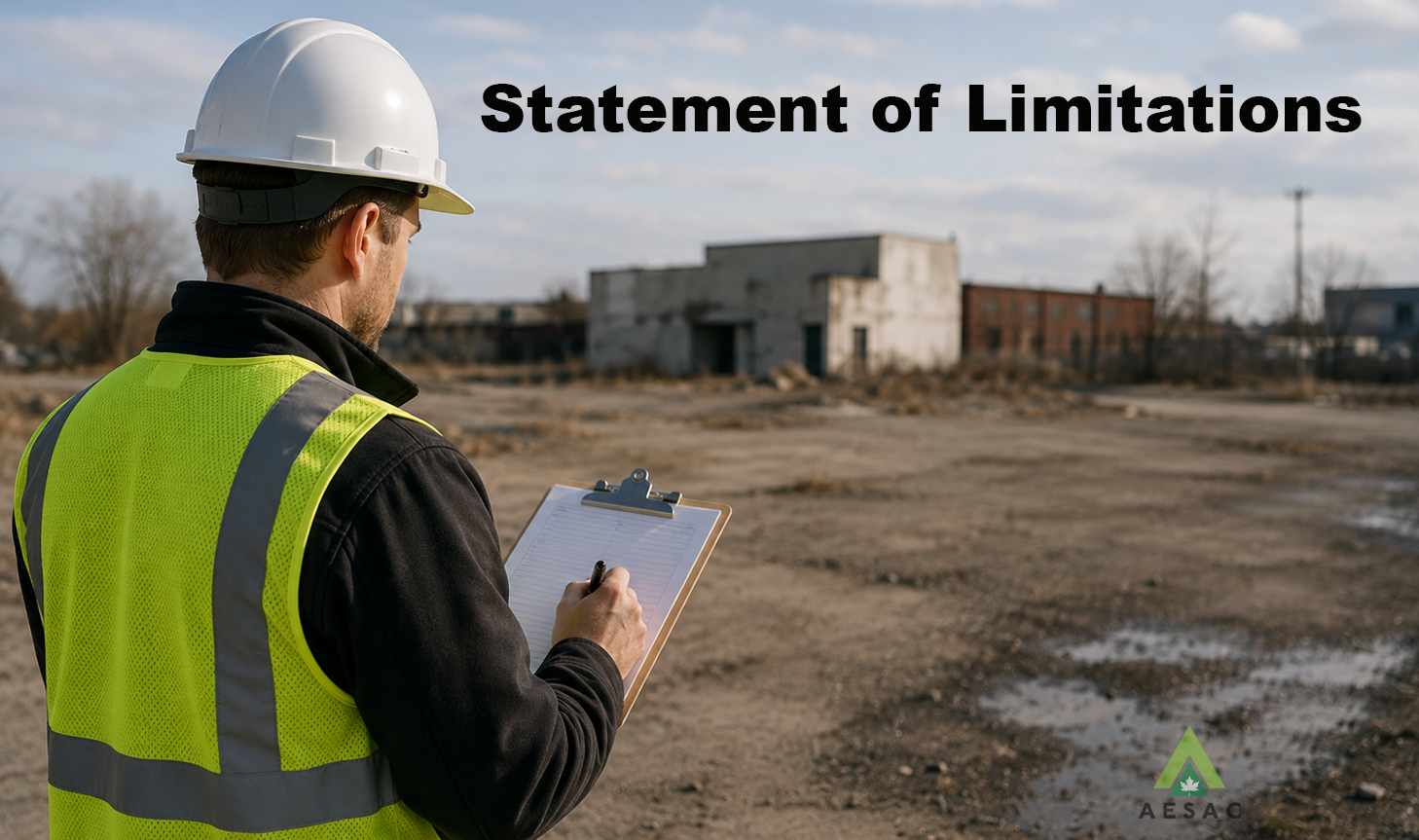
A very important, and often overlooked or misunderstood, component of Environmental Site Assessment reports is the Statement of Limitations, or SOL. These are meant to provide some level of protection for the consultant conducting the ESA and outline to the stakeholders what is and is not covered in the report and, ultimately, by the consultants insurance should things go sideways. When I started in environmental consulting many years ago; most consultants did not incorporate a SOL in their ESA reports, with some believing that they did not really provide any protection. When consultants first started using SOL, they were initially very brief – a paragraph or two mainly limiting unauthorized third-party use of the report. Now most SOL are a full page (or more) and usually require separate and unique versions of the SOL covering Phase I ESA, Phase II ESA, Peer Review, Remedial Reports and others. Over the years, Canadian case law has upheld the validity of SOL, especially regarding third party use and limitations to the privity of contract (Edgeworth Construction Ltd v. ND Lea & Associates – Supreme Court of Canada, 1993; and Wolverine Tube (Canada) Inc. v. Noranda Metal Industries Ltd., Ontario Court of Appeal, 1995).
A well-crafted SOL should cover things like: limitations on unauthorized third party use of the report; restrictions on third party liability (unless the party is authorized or permitted to use the report); a summary of what is included in the ESA (e.g. completion of the report to CSA or other Standards); listing of those activities not covered (e.g. structural, geotechnical, life-safety or other investigations, as well as asbestos surveys, remedial actions etc. unless specifically agreed to). The SOL may also include statements regarding assumptions on the accuracy of third party research or reporting, including but not necessarily limited to interview findings, regulatory and database information, laboratory test results, etc.
These protections are vital for consultants, especially considering how some clients often give the reports to third parties – without getting the required permission from the consultant for such third party use. This often occurs when the original ESA is conducted for a property owner, who then passes along the report to a potential purchaser, without seeking permission from the consultant to allow the third party to rely on the report (I’ll discuss these Reliance Letters in a future blog). It is important that the client/stakeholders are made aware of the SOL prior to finalizing any transactional or financing decisions. This is best accomplished by providing a copy of the typical SOL wording at the time of the work proposal, so there is no confusion about the SOL upon report submission. Some clients, especially financial institutions will not accept overly restrictive SOL, particularly when it comes to unreasonable restrictions or limitations on consultant liability, such as limiting liability to the fees charged. In my opinion, this type of liability limitation suggests the consultant doesn’t really stand behind their work – after all that’s why we carry millions of dollars in insurance. In closing, consultants should always include a comprehensive SOL in their ESA reports and ensure all stakeholders fully understand the implications. It’s also a good idea for both client and consultants to have the SOL wording reviewed and vetted by a qualified environmental lawyer.
Bill Leedham, P. Geo., CESA
Bill is the Head Instructor and Course Developer for the Associated Environmental Site Assessors of Canada (www.aesac.ca); and the founder and President of Down 2 Earth Environmental Services Inc. You can contact Bill at info@down2earthenvironmental.ca

In-House Training
Membership
About Us
Contact UsCopyright (c) 2026 Associated Environmental Site Assessors of Canada; AESAC Inc.