- Home
- Training Courses
- Membership
- About Us
- Instructors Blog
- December 2023: All I Want For Christmas
- November 2023: ESA Report Reviews
- October 2023: Can AI Write an ESA Report?
- September 2023: Getting Paid... or Not
- August 2023: Take Me Back...
- July 2023: To Bid or Not To Bid
- June 2023: Selecting a Supplier
- April 2023: Phase 1 Problems, Part 3
- March 2023: Phase 1 Problems, Part 2
- February 2023: Phase 1 Problems, Part 1
- January 2023: Working Outside in Winter
- 2022 Blogs
- 2021 Blogs
- December 2021: Asbestos in your Home
- Sept 2021: Dirty Jars And Other Bad Things… Part 2
- August 2021: Dirty Jars And Other Bad Things… Part 1
- July 2021: How do you want that drawing to look? Part 2
- June 2021: How Did You Want That Drawing To Look? Part 1
- April 2021: So You Need a RSC... Part 2
- March 2021: So You Need a RSC... Part 1
- February 2021: What's In Your Toolbox? Part 2
- January 2021: What's In Your Toolbox? Part 1
- 2020 Blogs
- December 2020: A Day in the Life, Part 2
- November 2020: A Day in the Life, Part 1
- October 2020: Exploring Your Career Path
- September 2020: So You Want To Start Your Own Business - Part 2
- August 2020- So You Want to Start Your Own Business
- June 2020: Effective Communication
- May 2020: Tips For Working From Home
- April 2020: Conducting ESA’s During a Pandemic
- March 2020: It's Not Easy Being Green
- February 2020: Looking Ahead; Bold Predictions for the Next Decade
- January 2020: Looking Back; A Decade in Review
- 2019 Blogs
- 2018 Blogs
- 2017 Blogs
- 2016 Blogs
- 2015 Blogs
- Find an AESAC Member
Menu- Home
- Training Courses
- » Training Courses
- » Webinar Series
- » Calendar of Events
- » Course Registration
- » Course Instructors
- » Testimonials
- Membership
- » Become a Member
- » Certifications
- » Membership Search
- » Update Member Profile
- » Members Only
- » » Member Login
- » » Membership Renewal
- » » Create/Change Password
- » » CESA Certification Application
- About Us
- » About AESAC
- » Course Instructors
- » Contact Us
- Instructors Blog
- » December 2023: All I Want For Christmas
- » November 2023: ESA Report Reviews
- » October 2023: Can AI Write an ESA Report?
- » September 2023: Getting Paid... or Not
- » August 2023: Take Me Back...
- » July 2023: To Bid or Not To Bid
- » June 2023: Selecting a Supplier
- » April 2023: Phase 1 Problems, Part 3
- » March 2023: Phase 1 Problems, Part 2
- » February 2023: Phase 1 Problems, Part 1
- » January 2023: Working Outside in Winter
- » 2022 Blogs
- » » December 2022: Advice To My Younger Self
- » » October 2022: Pre-Purchase Due Diligence
- » » Sept 2022: Words Matter
- » » July 2022: Let Us Come To You
- » » April 2022: Due Diligence
- » » March 2022: Time Management
- » » February 2022: Spinning Augers... Part 2
- » » January 2022: Spinning Augers... Part 1
- » 2021 Blogs
- » » December 2021: Asbestos in your Home
- » » Sept 2021: Dirty Jars And Other Bad Things… Part 2
- » » August 2021: Dirty Jars And Other Bad Things… Part 1
- » » July 2021: How do you want that drawing to look? Part 2
- » » June 2021: How Did You Want That Drawing To Look? Part 1
- » » April 2021: So You Need a RSC... Part 2
- » » March 2021: So You Need a RSC... Part 1
- » » February 2021: What's In Your Toolbox? Part 2
- » » January 2021: What's In Your Toolbox? Part 1
- » 2020 Blogs
- » » December 2020: A Day in the Life, Part 2
- » » November 2020: A Day in the Life, Part 1
- » » October 2020: Exploring Your Career Path
- » » September 2020: So You Want To Start Your Own Business - Part 2
- » » August 2020- So You Want to Start Your Own Business
- » » June 2020: Effective Communication
- » » May 2020: Tips For Working From Home
- » » April 2020: Conducting ESA’s During a Pandemic
- » » March 2020: It's Not Easy Being Green
- » » February 2020: Looking Ahead; Bold Predictions for the Next Decade
- » » January 2020: Looking Back; A Decade in Review
- » 2019 Blogs
- » » November 2019
- » » September 2019
- » » August 2019
- » » July 2019
- » » May 2019
- » » March 2019
- » » February 2019
- » » January 2019
- » 2018 Blogs
- » » November 2018
- » » October 2018
- » » September 2018
- » » August 2018
- » » July 2018
- » » June 2018
- » » May 2018
- » » March 2018
- » » February 2018
- » » January 2018
- » 2017 Blogs
- » » April 2017
- » » June 2017
- » » August 2017
- » » September 2017
- » » December 2017
- » 2016 Blogs
- » » October 2016
- » » September 2016
- » » August 2016
- » » July 2016
- » » June 2016
- » » March 2016
- » » January 2016
- » » December 2016
- » » November 2016
- » 2015 Blogs
- » » April 2015
- » » July 2015
- » » September 2015
- » » October 2015
- » » December 2015
- Find an AESAC Member
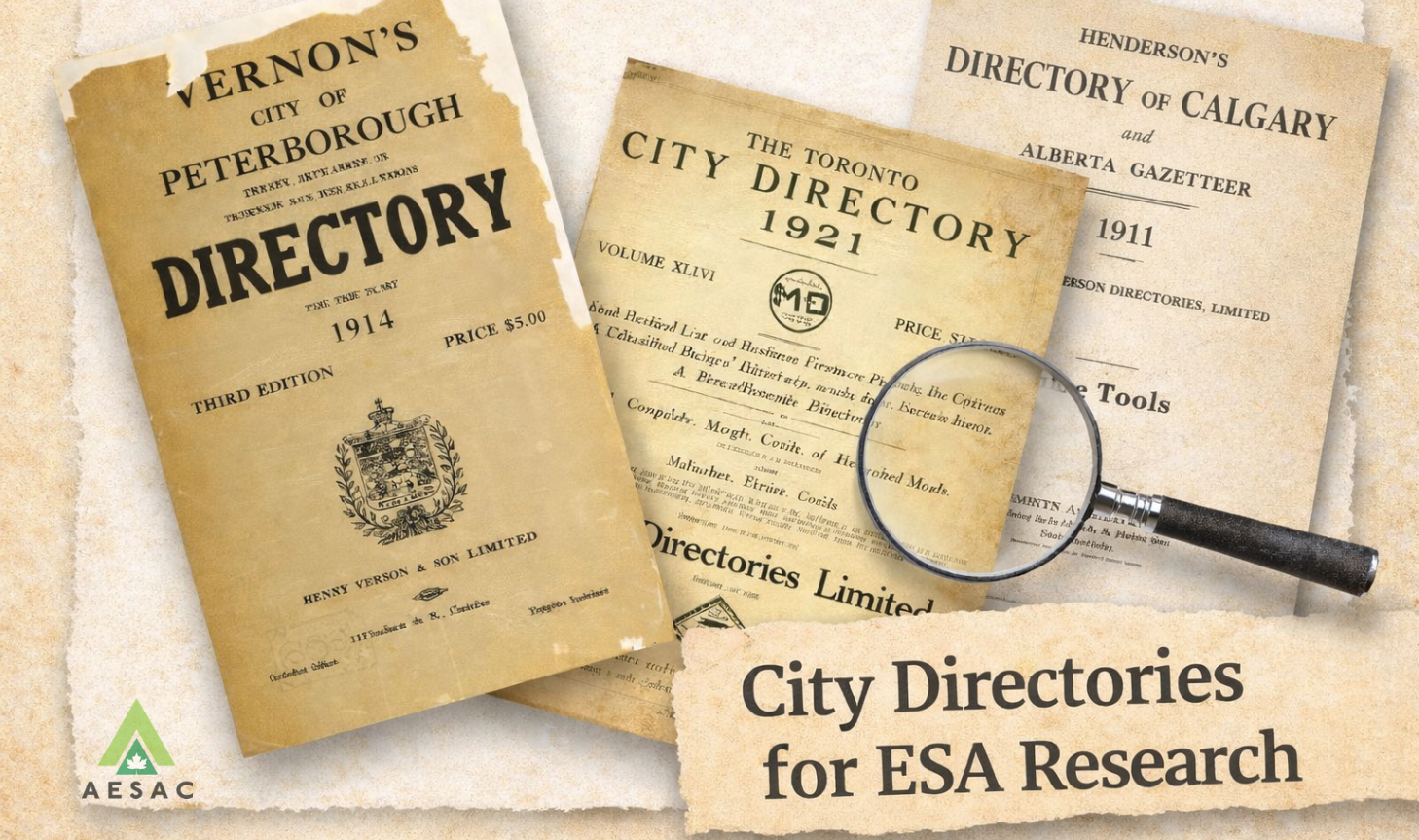
I have been peer reviewing a number of Phase 1 ESA reports lately, and as always there are a few that are very good, many that are adequate, and a disappointing number that are deficient. A common theme to the deficient reports is a general failure to not only complete all the necessary historical research, but also a lack of perspective in understanding the significance of the data as it pertains to the historical development of the subject site, and off-site properties within the ESA Study Area. This often leads to inaccuracies in determining the First Developed Use of the property, and identifying Potentially Contaminating Activities (PCA) and their associated Area(s) of Potential Environmental Concern (APEC). This month I will discuss the use of City Directories as part of the historical research for conducting Phase 1 ESAs.
A bit of history:
City Directories, or Street Directories, were first developed as a precursor to telephone books (if you remember them). You may have also heard of them by different publishers names such as Vernon’s, Might’s, Polk’s, Criss-Cross, Henderson’s and others. They were originally intended as a sales and marketing tool, and contained an alphabetical listing of residents/occupants by municipal address (where such addresses were available), along with business listings. The first City Directory published in Canada was for Quebec City in 1790 by Hugh Mackay. By the mid to late 1800’s extensive collections were available for urban centres across Canada. Some rural areas were covered by county directories; however the coverage and listings are generally less extensive and detailed than the urban directories. By the 2000’s many of the printed editions were offered in digital format, and in some cities, the earlier editions have been digitized for greater access. These directories are useful for historical research when conducting ESAs, and are commonly available for review in municipal and university libraries, provincial and national archives, as well as some online sources.How do we use City Directories for ESA research?
Along with aerial imagery, Fire Insurance Plans and other records review, City Directories are a great tool in determining the development history and occupancy of a Site. Information can be discovered regarding First Developed Use, historical commercial and industrial activities, and changes in occupancy – not just at the subject site, but for other properties in the study area. The directory search is often sub-contracted; personally I prefer to do the research myself in order to catch all the little details, to be able to double check data, and to dive a little deeper as needed. Some things to consider: go back far enough in time to at least the First Developed Use and review data in 5 to 10 year intervals as necessary; research not just the site but surrounding properties as well (this may encompass several streets); watch for ‘red flags’ (gas stations, auto garages, dry cleaners, industrial operations, rail lines, and more); document changes in occupancy and durations of activity; corroborate the directory data with other sources (FIP, aerials, interviews, etc.).Some pitfalls and errors:
Whether you conduct the research yourself, or sub-contract the work to others, there are a few potential errors to watch for: the research was limited in that it didn’t go back far enough or the time intervals were too great such that data was missed; significant site activities may be missed when no municipal addresses are available (watch for listings for ‘North/South/EastWest side of street’ and correlate to street intersections, rail lines or other addresses to locate the subject site); watch for historical changes in Street names (e.g. historically ‘Main Street’ was re-named to ‘King Street’); be aware of compass directions in street names (for example my home municipality has a King Street North, South, East and West – very confusing); don’t forget off-site listings – I see far too many searches that are limited to the subject site alone, and neighbouring or nearby gas stations, dry cleaners, etc. get missed: be aware of short term occupancies, especially for dry cleaners in a retail mall – a lot of environmental damage can occur in a short time for some activities. Lastly, be thorough, consistent and detailed in your research and the interpretation and assessment of your findings – there’s a lot more to it than simply marking a check box then cutting and pasting data into your report.Bill Leedham, P. Geo., CESA
Bill is the Head Instructor and Course Developer for the Associated Environmental Site Assessors of Canada (www.aesac.ca); and the founder and President of Down 2 Earth Environmental Services Inc. You can contact Bill at info@down2earthenvironmental.ca

Training Courses
Membership
About Us
Contact UsCopyright (c) 2025 Associated Environmental Site Assessors of Canada; AESAC Inc.