- Home
- Training Courses
- Membership
- About Us
- Instructors Blog
- December 2023: All I Want For Christmas
- November 2023: ESA Report Reviews
- October 2023: Can AI Write an ESA Report?
- September 2023: Getting Paid... or Not
- August 2023: Take Me Back...
- July 2023: To Bid or Not To Bid
- June 2023: Selecting a Supplier
- April 2023: Phase 1 Problems, Part 3
- March 2023: Phase 1 Problems, Part 2
- February 2023: Phase 1 Problems, Part 1
- January 2023: Working Outside in Winter
- 2022 Blogs
- 2021 Blogs
- December 2021: Asbestos in your Home
- Sept 2021: Dirty Jars And Other Bad Things… Part 2
- August 2021: Dirty Jars And Other Bad Things… Part 1
- July 2021: How do you want that drawing to look? Part 2
- June 2021: How Did You Want That Drawing To Look? Part 1
- April 2021: So You Need a RSC... Part 2
- March 2021: So You Need a RSC... Part 1
- February 2021: What's In Your Toolbox? Part 2
- January 2021: What's In Your Toolbox? Part 1
- 2020 Blogs
- December 2020: A Day in the Life, Part 2
- November 2020: A Day in the Life, Part 1
- October 2020: Exploring Your Career Path
- September 2020: So You Want To Start Your Own Business - Part 2
- August 2020- So You Want to Start Your Own Business
- June 2020: Effective Communication
- May 2020: Tips For Working From Home
- April 2020: Conducting ESA’s During a Pandemic
- March 2020: It's Not Easy Being Green
- February 2020: Looking Ahead; Bold Predictions for the Next Decade
- January 2020: Looking Back; A Decade in Review
- 2019 Blogs
- 2018 Blogs
- 2017 Blogs
- 2016 Blogs
- 2015 Blogs
- Find an AESAC Member
Menu- Home
- Training Courses
- » Training Courses
- » Webinar Series
- » Calender of Events
- » Course Registration
- » Course Instructors
- » Testimonials
- Membership
- » Become a Member
- » Certifications
- » Membership Search
- » Update Member Profile
- » Members Only
- » » Member Login
- » » Membership Renewal
- » » Create/Change Password
- » » CESA Certification Application
- About Us
- » About AESAC
- » Course Instructors
- » Contact Us
- Instructors Blog
- » December 2023: All I Want For Christmas
- » November 2023: ESA Report Reviews
- » October 2023: Can AI Write an ESA Report?
- » September 2023: Getting Paid... or Not
- » August 2023: Take Me Back...
- » July 2023: To Bid or Not To Bid
- » June 2023: Selecting a Supplier
- » April 2023: Phase 1 Problems, Part 3
- » March 2023: Phase 1 Problems, Part 2
- » February 2023: Phase 1 Problems, Part 1
- » January 2023: Working Outside in Winter
- » 2022 Blogs
- » » December 2022: Advice To My Younger Self
- » » October 2022: Pre-Purchase Due Diligence
- » » Sept 2022: Words Matter
- » » July 2022: Let Us Come To You
- » » April 2022: Due Diligence
- » » March 2022: Time Management
- » » February 2022: Spinning Augers... Part 2
- » » January 2022: Spinning Augers... Part 1
- » 2021 Blogs
- » » December 2021: Asbestos in your Home
- » » Sept 2021: Dirty Jars And Other Bad Things… Part 2
- » » August 2021: Dirty Jars And Other Bad Things… Part 1
- » » July 2021: How do you want that drawing to look? Part 2
- » » June 2021: How Did You Want That Drawing To Look? Part 1
- » » April 2021: So You Need a RSC... Part 2
- » » March 2021: So You Need a RSC... Part 1
- » » February 2021: What's In Your Toolbox? Part 2
- » » January 2021: What's In Your Toolbox? Part 1
- » 2020 Blogs
- » » December 2020: A Day in the Life, Part 2
- » » November 2020: A Day in the Life, Part 1
- » » October 2020: Exploring Your Career Path
- » » September 2020: So You Want To Start Your Own Business - Part 2
- » » August 2020- So You Want to Start Your Own Business
- » » June 2020: Effective Communication
- » » May 2020: Tips For Working From Home
- » » April 2020: Conducting ESA’s During a Pandemic
- » » March 2020: It's Not Easy Being Green
- » » February 2020: Looking Ahead; Bold Predictions for the Next Decade
- » » January 2020: Looking Back; A Decade in Review
- » 2019 Blogs
- » » November 2019
- » » September 2019
- » » August 2019
- » » July 2019
- » » May 2019
- » » March 2019
- » » February 2019
- » » January 2019
- » 2018 Blogs
- » » November 2018
- » » October 2018
- » » September 2018
- » » August 2018
- » » July 2018
- » » June 2018
- » » May 2018
- » » March 2018
- » » February 2018
- » » January 2018
- » 2017 Blogs
- » » April 2017
- » » June 2017
- » » August 2017
- » » September 2017
- » » December 2017
- » 2016 Blogs
- » » October 2016
- » » September 2016
- » » August 2016
- » » July 2016
- » » June 2016
- » » March 2016
- » » January 2016
- » » December 2016
- » » November 2016
- » 2015 Blogs
- » » April 2015
- » » July 2015
- » » September 2015
- » » October 2015
- » » December 2015
- Find an AESAC Member
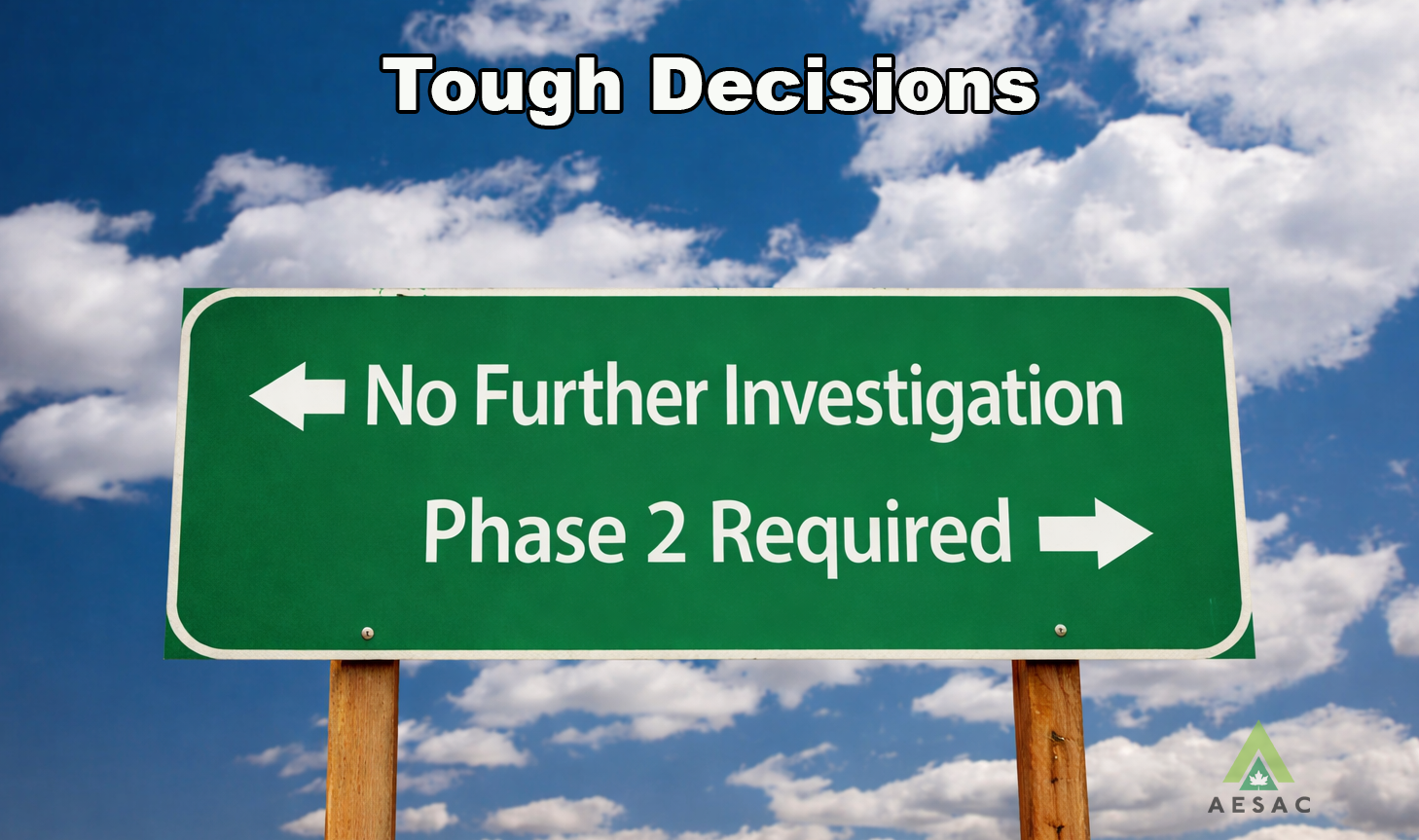
As environmental consultants most of us have come across properties where it can be a tough decision whether or not to recommend further intrusive investigation based on the findings of a Phase I Environmental Site Assessment (ESA). Some sites are very straightforward; no potential environmental concerns have been identified at the Site or within the ESA Study Area, and it’s simple to conclude no further investigation is warranted. Other times, it’s evident that a Phase 2 ESA is required – sites with a history of industrial use, fuel storage, spills or known contamination; or located next door and down gradient from a dry cleaner or gas station. But sometimes you may get a property that’s in a ‘grey area’ for potential environmental concerns. For example, it's unconfirmed if there may or may not have been a heating oil storage tank 30 years ago; an off-site gas station is located 120 m cross gradient from your site; or there are conflicting interview statements form owners and occupants regarding historical activities. These situations can be difficult for the consultant, not only to make a rational conclusion; but also to present and defend that conclusion to the client, especially if the findings are not what they had hoped for. Here are a few suggestions based on past experiences.
What is the Purpose of the ESA?
Consider why you are conducting the ESA. For some regulatory requirements, the decision is out of your hand. For instance, in Ontario for the purpose of submitting a Record of Site Condition, some situations mandate an automatic Phase Two ESA regardless of the consultants professional opinion regarding the potential for risk (e.g. presence of any on-site area of potential environmental concern). In other situations, there is no requirement for regulatory reporting, and the ESA is for private due diligence and/or financing – so the needs of the stakeholders must be considered.Who are the Stakeholders?
The consultant must know all the project stakeholders and fully understand their objectives, comfort level and risk tolerance. A commercial property owner who has occupied the site since first developed use, has no plans to divest the property and requires a Phase I ESA for a low-value mortgage refinancing may have a much higher tolerance for risk than a first time purchaser requiring bank financing to acquire an industrial facility. In most cases, financial institutions have a low tolerance for unknown environmental risk and require a greater comfort level (i.e. clear, unambiguous conclusions from the consultant in order to provide an understanding of the potential risks). There can often be pressure on the consultant from clients and their agents regarding the financial and timing implications of recommending further investigation; however these transactional influences should never be the deciding factor for the consultant – the observations, facts and findings obtained from the Phase I ESA should dictate the conclusions and recommendations.Still Not Sure?
Despite the above considerations, there are still sites where the decision to recommend further work can be difficult. In these cases, I suggest some or all of the following tactics:- Carefully review the findings, and if possible discuss with your supervisor, co-workers, even an out-of-company mentor or colleagues if needed. Group expertise, company policies and the opinions of objective people with more experience can be very helpful. Sometimes you just need to review all the data and ‘sleep on it’ (if you have time) to digest all that collected information.
- Regardless of the outcome, it’s vital that your conclusions are well informed, rational and defensible. Consider the worst-case scenario – if the project goes sideways and you get sued for your report – could you defend your work and your conclusions in a court of law?
- Imagine if you were a third party consultant hypothetically retained to provide a peer review of your own report. Would you agree with you own findings and conclusions?
- If you determined that no further ESA work was required based on your findings; your client then sells the site and future work by another consultant discovers contamination that you potentially missed – could you still provide a rational defense of your conclusions?
- When you start to consider what could be at stake based on the findings of the Phase I ESA (multi-million dollar transaction decisions based on a few thousand dollars of consulting fees); not to mention the personal and professional costs for the consultant if they get it wrong (reputation, professional license, insurance, even the ability to practice) – it’s no surprise that so many consultants tend to be fairly conservative in their conclusions and recommendations.
As I said, some sites the evidence is obvious, and the conclusions are relatively easy. I hope this helps for some of those grey-area’ properties.
Bill Leedham, P. Geo., CESA
Bill is the Head Instructor and Course Developer for the Associated Environmental Site Assessors of Canada (www.aesac.ca); and the founder and President of Down 2 Earth Environmental Services Inc. You can contact Bill at info@down2earthenvironmental.ca

In-House Training
Membership
About Us
Contact UsCopyright (c) 2026 Associated Environmental Site Assessors of Canada; AESAC Inc.